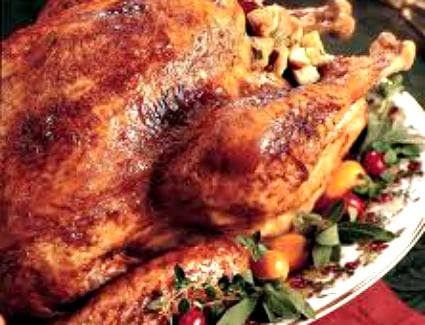
You probably know the story of the Mayflower ship, but do you know that these were only the beginnings of the celebration.If not, click here.
READ who, where, when and how this celebration became an official tradition
In 1817, New York
became the first of several states to officially adopt an annual
Thanksgiving holiday; each celebrated it on a different day, however,
and the American South remained largely unfamiliar with the tradition.
In 1827, the noted magazine editor and prolific writer Sarah Josepha
Hale—author, among countless other things, of the nursery rhyme “Mary Had a Little Lamb”—launched a campaign to establish Thanksgiving as a
national holiday. For 36 years, she published numerous editorials and
sent scores of letters to governors, senators, presidents and other
politicians.
Abraham Lincoln finally heeded her request in 1863, at the height of the Civil War,
in a proclamation entreating all Americans to ask God to “commend to
his tender care all those who have become widows, orphans, mourners or
sufferers in the lamentable civil strife” and to “heal the wounds of the
nation.”
He scheduled Thanksgiving for the final Thursday in November,
and it was celebrated on that day every year until 1939, when Franklin D. Roosevelt moved the holiday up a week in an attempt to spur retail sales during the Great Depression.
Roosevelt’s plan, known derisively as Franksgiving, was met with
passionate opposition, and in 1941 the president reluctantly signed a
bill making Thanksgiving the fourth Thursday in November.
People have been making jack-o'-lanterns at Halloween
for centuries. The practice originated from an Irish myth about a man
nicknamed "Stingy Jack."
According to the story, Stingy Jack invited the
Devil to have a drink with him. True to his name (stingy:tacaño), Stingy Jack didn't
want to pay for his drink, so he convinced the Devil to turn himself
into a coin that Jack could use to buy their drinks.
Once the Devil did
so, Jack decided to keep the money and put it into his pocket next to a
silver cross, which prevented the Devil from changing back into his
original form.
Jack eventually freed the Devil, under the condition that
he would not bother Jack for one year and that, should Jack die, he
would not claim his soul. The next year, Jack again tricked the Devil
into climbing into a tree to pick a piece of fruit. While he was up in
the tree, Jack carved a sign of the cross into the tree's bark so that
the Devil could not come down until the Devil promised Jack not to
bother him for ten more years.
Soon after, Jack died. As the legend goes, God would not allow such
an unsavory figure into heaven. The Devil, upset by the trick Jack had
played on him and keeping his word not to claim his soul, would not
allow Jack into hell.
He sent Jack off into the dark night with only a
burning coal to light his way. Jack put the coal into a carved-out
turnip and has been roaming the Earth with ever since. The Irish began
to refer to this ghostly figure as "Jack of the Lantern," and then,
simply "Jack
The irish tradition travelled its way to North America together with the Irish people, once there, pumkins were easier to find on Autumn
If you want to be more historical this year try to carve a turnip instead of a pumpkin
Like all years we are getting close to Halloween time and you know, dear students,
that what I like most is giving historical facts, so....
The history of" halloween" is more than 2,000 years old. The Celts who lived in Ireland,Scotland,Wales and Cornwall,were the first to celebrate the festival.
The Celts worshipped Nature.They worshipped a Sun God and believed that without him, they would not live.
They also worshipped Samhain who was the lord of the dead and of the cold, dark, winter season.
They believed that on October 31st Samhain would call together all of the dead and these souls would take on the shape of an animal.
They believed that all the creatures walked on earth on that night.This was called the vigil of Samhain.
When the Romans introduced Catholicism to the celts they had a festival to celebrate all the saints which didn't have their own holiday. This was celebrated on November 1st and was called All Saints Day or "All Hallows Day" in Gaelic.
The Roman Catholics thought that this would stop people celebrating the festival of Samhain on October 31st. Unfortunatelly, according to tradition, the devil and his friends came out on October 31st to make fun of all Hallows day. So October 31st became known as All Hallows Eve, and over time it has been reduced to Halloween.
If you want more information take a look at this video